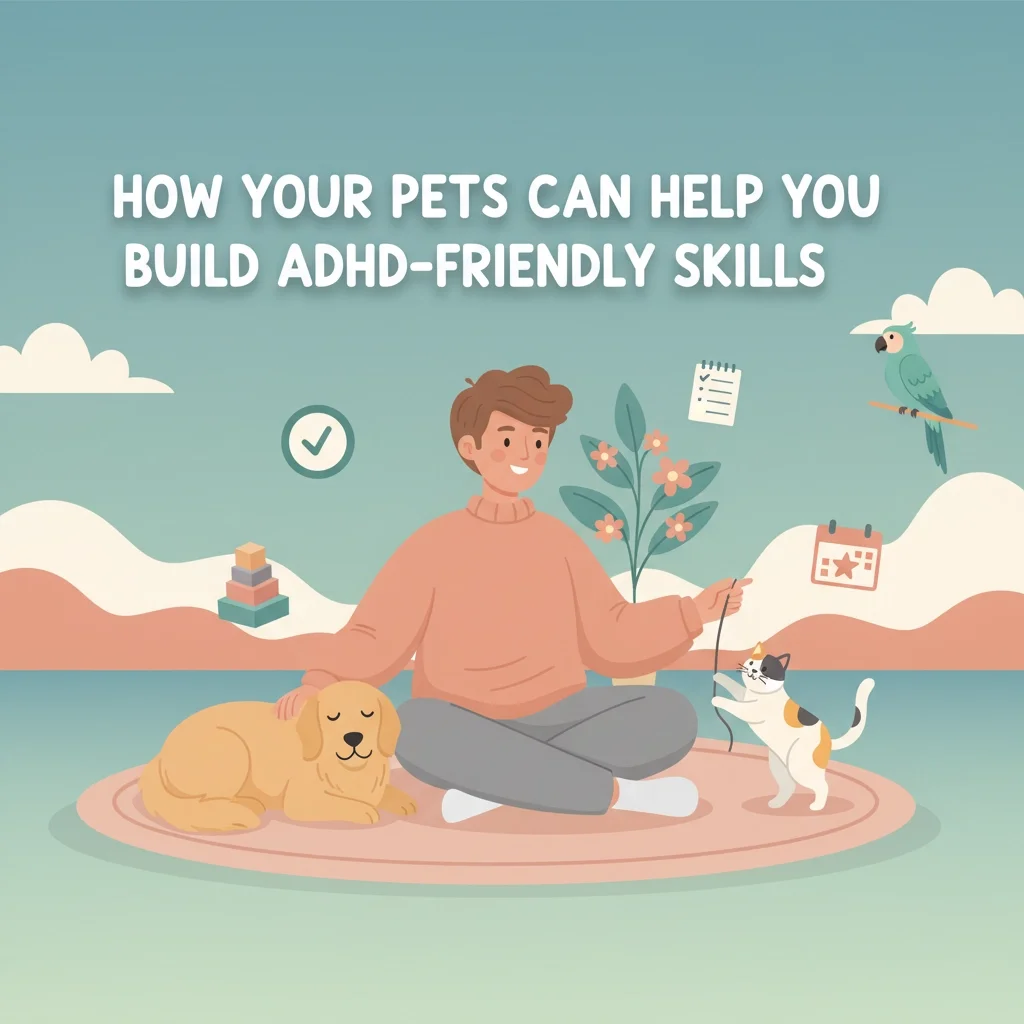
How Your Pets Can Help You Build ADHD-Friendly Skills
Focus time: 7 minutes (plus a quick pet-powered brain break halfway through!)
Living with ADHD can feel like riding a rollercoaster: one minute you're hyper focused, the next you're overwhelmed by the simplest task. But what if your pet could help smooth out those ups and downs? Your pet isn't just a companion; they're naturally equipped to teach you essential skills like task initiation, time management, and even long-term planning. Let's explore how your pet's love and routine can support your ADHD brain in the most gentle, practical ways.
1. Task Initiation: Get Started with a Little Help from Your Pet
Why It's Hard: Starting a task, no matter how small, can feel like trying to push a boulder uphill. Your brain knows what needs to be done, but somehow you're stuck at the starting line.
How Your Pet Helps: Pets create built-in starting points that you simply can't ignore. They need food, walks, and playtime: activities that become natural momentum generators. These non-negotiable moments can jumpstart your day and help you tackle other tasks that have been sitting on your mental to-do list.
Try This: After feeding your cat or walking your dog, immediately spend five minutes on a task you've been avoiding. The momentum from completing one action flows beautifully into the next. It's like your pet is handing you a gentle push forward.
Bonus Tip: Let your pet's energy inspire you. If your dog is playful after a walk, ride that wave of enthusiasm and dive into the next item on your list. Their joy becomes your motivation.
2. Time Awareness: Let Your Pet Be Your Personal Clock
Why It's Hard: ADHD brains are notorious for losing track of time. Minutes can feel like hours, or hours can disappear without notice.
How Your Pet Helps: Pets are creatures of habit with their own internal clocks. They instinctively know when it's time to eat, play, or nap: and they'll definitely remind you. Their predictable routine can help you structure your own day.
Try This: Anchor your schedule to your pet's natural rhythms. Use feeding times as reminders to transition between tasks, or let their afternoon nap signal when it's time for your own focused work session.
Bonus Tip: Use playtime as a practice round for managing time awareness. Set a timer for 15 minutes and stay fully present during that stretch. Notice how it feels to be completely engaged with time boundaries.
🐾 Pet-Medicine Brain Break: Refill Your Energy Together!
Feeling your focus slipping? Take a two-minute break to connect with your pet:
Grab their favorite toy and have a mini play session
Take deep breaths while petting them: notice their softness or warmth
Talk to your pet about what's on your mind: they're the best listeners!
A quick break with your pet can reset your brain and get you ready for the next skill.
3. Managing Tasks: Pets Make Great Accountability Partners
Why It's Hard: Following through on tasks and staying organized takes serious mental effort. It's exhausting to keep track of everything swirling around in your head.
How Your Pet Helps: Caring for a pet involves multiple small, manageable tasks like feeding, grooming, and cleaning up. These routines help you build consistency and follow-through in other areas of life. Plus, your pet will definitely hold you accountable: try skipping dinner time and see what happens!
Try This: Write down your pet's daily care tasks and add one or two personal goals to the same list. There's something magical about checking things off alongside your pet's needs. It makes your goals feel just as important and non-negotiable.
Bonus Tip: Teach your pet a new trick. Training them is like task management in action: you'll practice breaking a big goal into smaller, achievable steps while building patience and consistency.
4. Prioritizing Tasks: Pets Teach You What Matters Most
Why It's Hard: ADHD brains often struggle to decide which tasks are urgent versus optional. Everything can feel equally important (or unimportant) at the same time.
How Your Pet Helps: Your pet's needs naturally highlight what true priorities look like. A bathroom break can't wait, but organizing your closet can. They live in the moment and focus on what's actually urgent right now.
Try This: Use your pet's needs as a mental framework for your own tasks. Ask yourself: Is this urgent like a dog walk, or can it wait like buying a new toy? This simple comparison can cut through the mental clutter.
Bonus Tip: Watch how your pet prioritizes instinctively: they always choose the squeaky toy over the boring one. Mimic their decisiveness when facing your own choices.
5. Long-Term Planning: Build the Future with Your Pet
Why It's Hard: Long-term goals often feel too abstract or overwhelming to stick with. Without immediate rewards, it's easy to lose motivation.
How Your Pet Helps: Pets require forward-thinking care, like scheduling vet visits, planning for food supplies, or preparing for seasonal needs. These tangible milestones make long-term planning feel real and rewarding rather than abstract.
Try This: Use pet-related events as anchors for planning your own goals. Schedule your own check-ups around your pet's vet appointments, or plan personal rewards alongside special pet outings.
Bonus Tip: Treat yourself and your pet to something special: like a hike or trip to the park: when you hit a big milestone. Their excitement will fuel your motivation for the next goal.
Final Thoughts: Small Steps, Big Wins (and Tail Wags)
Your pet is more than just a companion: they're your personal ADHD coach, helping you build structure, focus, and routine in the most natural way possible. By weaving their needs into your daily life, you're not only improving your habits but also strengthening the bond with your furry friend.
The next time your dog nudges you for a walk or your cat demands breakfast, remember: they're not just looking for attention: they're helping you grow into a more organized, focused version of yourself.
Quick Checklist: ADHD Skills Your Pet Teaches You
Task Initiation:
Use pet care as momentum starters
Complete one pet task, then tackle an avoided task immediately
Let their energy inspire your next action
Time Management:
Anchor your schedule to pet feeding/walking times
Practice time awareness during play sessions
Use their routine as transition signals
Task Management:
List pet care alongside personal goals
Practice follow-through with pet training
Build consistency through daily care routines
Prioritizing:
Compare task urgency to pet needs (walk vs. toy shopping)
Watch and mimic their natural decisiveness
Focus on immediate, tangible needs first
Long-Term Planning:
Schedule personal goals around pet appointments
Use pet milestones as planning anchors
Celebrate achievements together with special outings
What skill will you and your pet tackle together today?
Take a moment right now to pause with your pet. Notice their calm presence, their unconditional love, their simple wisdom about living in the moment. This is Pet Medicine: the natural support and guidance our animal companions offer us every day. Ready to explore more gentle rituals and practices with your furry teacher? Discover additional Pet Medicine resources and guided experiences through our Paws 4 Wellness app.